
Kasbah of the Udayas
UNESCO Almohad fortress above the Bouregreg with Andalusian Gardens.
Guided medina and Kasbah of the Udayas walks, Chellah and Hassan Tower heritage tours, artisan workshops, and Atlantic day trips — handpicked and vetted by our Rabat team.
Rabat is Morocco's political capital and a UNESCO World Heritage Site — layering an Almohad kasbah, a 17th-century Andalusian medina, Merinid necropolises, and French-era avenues into one calm coastal city.
UNESCO Almohad fortress above the Bouregreg with Andalusian Gardens.
Unfinished 12th c Almohad minaret and the Mausoleum of Mohammed V.
Roman Sala Colonia and Merinid necropolis — storks nesting on minarets.
17th c Andalusian-founded old town — Rue des Consuls and Rbati carpets.
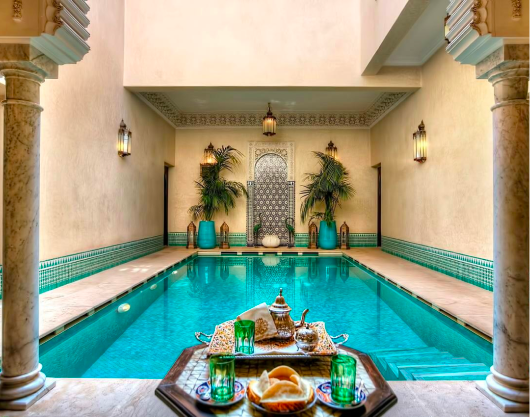
Tiled courtyards and orange trees inside the Kasbah walls.
Dar al-Makhzen grounds and the Bab Soufara gate (exterior views).
Estuary, marina, and the twin city of Salé across the bridge.
Temara, Skhirat, and Mehdia beaches just outside the capital.
Straight answers from our on-the-ground team in Rabat.
Walk the UNESCO Kasbah of the Udayas and its Andalusian Gardens, climb the esplanade at Hassan Tower and the Mausoleum of Mohammed V, wander Chellah's Roman ruins and Merinid necropolis among the storks, browse Rue des Consuls in the medina, and cross the Bouregreg to Salé. Most travelers combine a guided medina + Kasbah walk with a Chellah visit and a day trip to Casablanca or Meknes.
March–June and September–November. Mild Atlantic days, cool nights, and the lowest rainfall. July–August is warm and busy along the coast; December–February is cool, green, and the cheapest time to visit. Book Kasbah and Chellah guides 3–7 days ahead in shoulder season.
Yes. Rabat is Morocco's political capital and one of its calmest, safest cities — well-policed, walkable, with a modern tram linking Rabat and Salé. Every operator listed on Visit Rabat is personally vetted by our on-the-ground team. Most bookings include free cancellation and support in English, French, and Arabic.
For your first day — yes. A 2–3 hour guided walk takes you through Rue des Consuls, up to the Kasbah of the Udayas, across the Andalusian Gardens, and down to the Bouregreg. Rabat's medina is smaller and more relaxed than Fes, so after day one most travelers explore comfortably on their own.
Salé across the Bouregreg (10 min by tram), Casablanca's Hassan II Mosque (50 min by Al Boraq high-speed train), Meknes imperial city and the Roman ruins of Volubilis (around 2–2.5 h), Temara and Skhirat beaches on the Atlantic, and Kénitra / Mehdia to the north. All are bookable as guided excursions with hotel pickup.
Rabat is famous for Rbati carpets (geometric, deep reds and blues), embroidered linens, hand-tooled leather, and silver jewelry. Rue des Consuls in the medina is the traditional carpet street; the Oulja artisan complex on the Salé side is great for pottery and woodwork.
Explore more in Morocco
Browse verified Rabat experiences — Kasbah walks, Chellah visits, medina tours, workshops, and Atlantic day trips. Book now, pay later, cancel for free on most.